
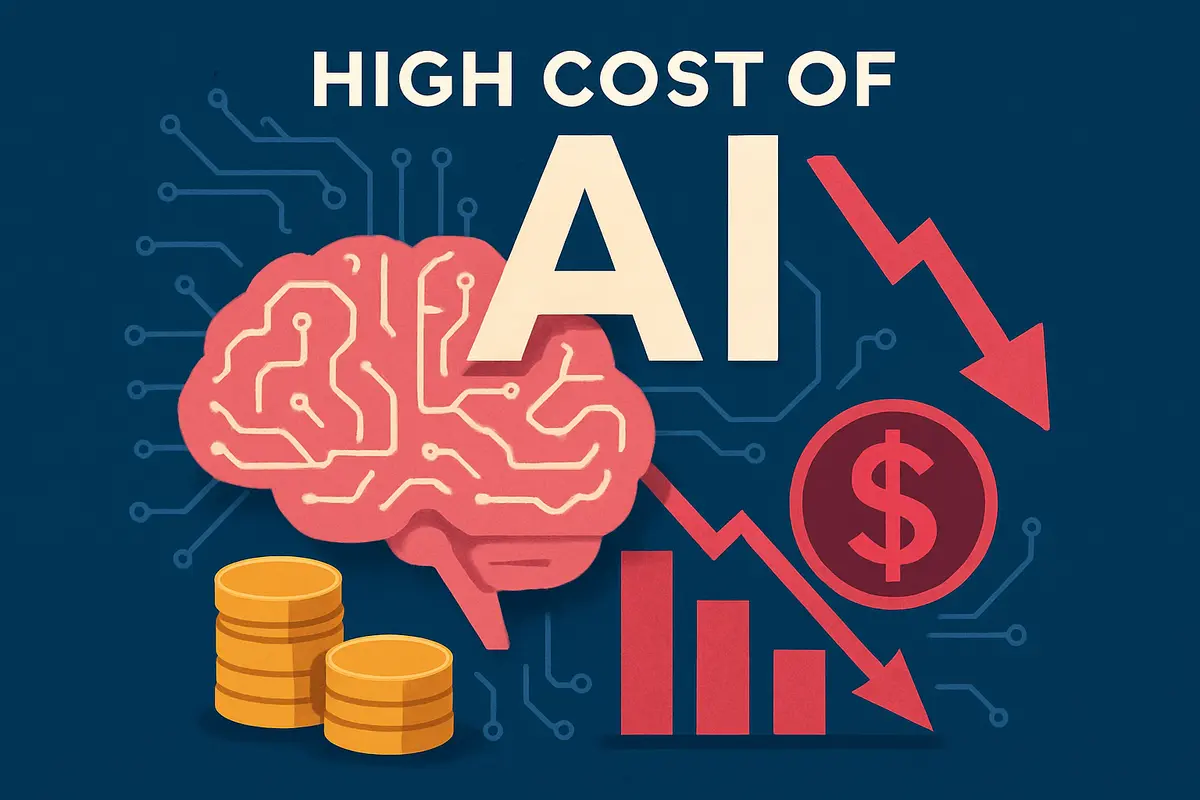
OpenAI generated $5.7 billion in revenue in Q1 2026 but lost $1.22 for every dollar earned after adjusting for stock-based compensation. That puts their operating margin deep in the red at minus 122 percent. This isn’t a glitch, it’s a strategic signal.
Most commentary treats these losses as temporary burn fueling growth, but that overlooks how structural the spending is. These margins expose a relentless cost curve with no easy path to profitability. The underlying expenses—compute power, talent, research, and infrastructure—haven’t scaled down in price; if anything, they intensify.
For businesses watching this play out, the takeaway is straightforward: OpenAI-style generative AI is not a cheap utility you plug into. The financial model behind these platforms assumes near-infinite capital chasing market dominance, a dynamic few startups or mid-market companies can replicate without being squeezed on costs or margin.
This kind of cost structure sets the stage for increased vendor lock-in and reliance on large providers who can sustain losses longer than their customers can afford. It also pressures the AI ecosystem toward commoditisation risks—where differentiation relies more on scale and money than innovation.
If you expect AI investment to be a lightweight operational upgrade, think again. The economics of AI platforms like OpenAI’s remain daunting, and understanding this means asking tougher questions about vendor choices and value capture.
Leave a Reply