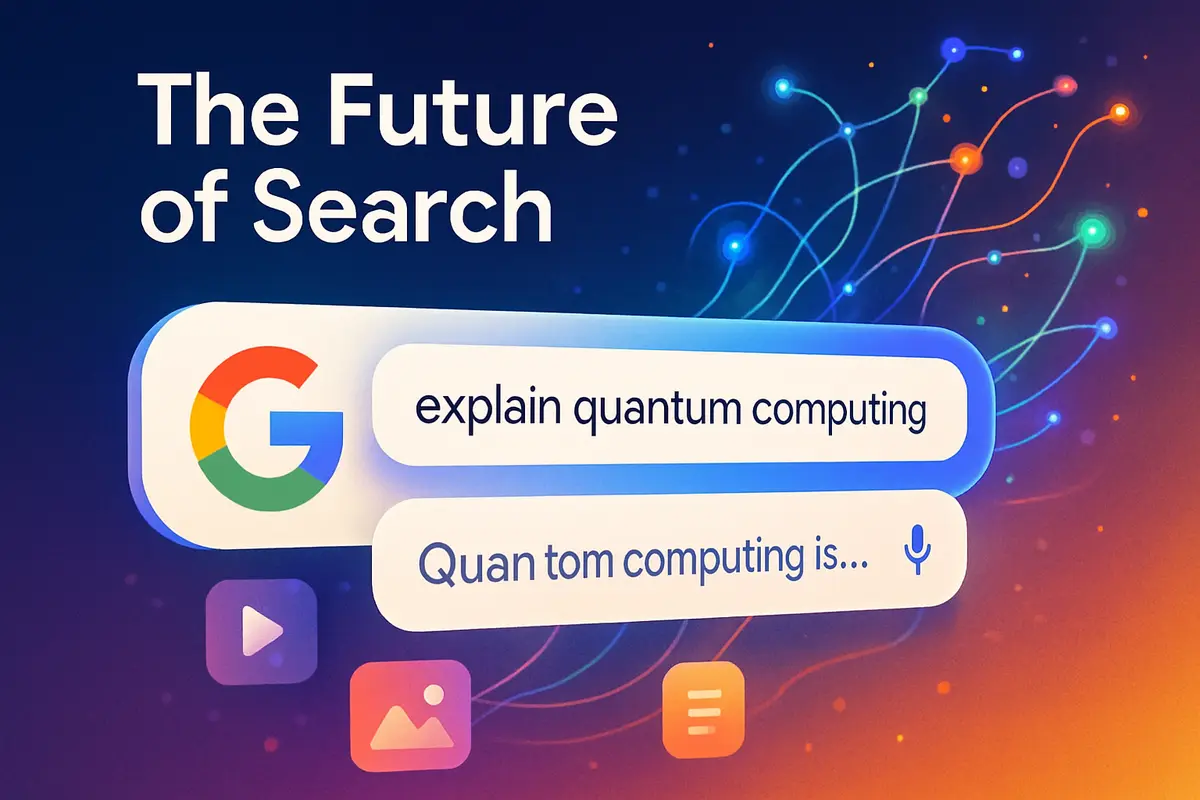
Google’s redesign of its core search interface after 25 years is more than a cosmetic update—it’s a strategic bet on a new mode of user interaction that could reshape web search and the ecosystem around it.
The classic search box, once a simple field for terse keywords, now expands dynamically to handle detailed, conversational queries. It’s no longer limited to text: users can submit images, PDFs, videos, even content dragged from Chrome tabs. Google is merging its AI Overviews and AI Mode into a unified, seamless experience that feels like talking to an AI assistant rather than entering a terse query string.
This shift is underpinned by Gemini 3.5 Flash, a new AI model optimized for speed and scale, designed to keep response latency low even as complexity grows. The result is a search interaction that is both instantaneous and capable of handling nuanced, multimodal inputs.
But the significance runs deeper. Google is transitioning from keyword matching to intent understanding, which challenges the established SEO and advertising models dependent on keyword density and fragment targeting. Content quality and relevance to natural language questions become paramount, disrupting longstanding digital marketing practices.
Moreover, Google’s investment—up to $190 billion in infrastructure this year alone—reveals their conviction that AI-driven search is the future of computing. The search box is evolving from a passive query input into an active AI-driven task platform, with interactive visuals, custom mini apps, and proactive AI monitoring agents.
This isn’t just evolution; it’s a fundamental rewiring of how billions engage with information online.
Google isn’t merely asking users to rethink how they search—they’re betting vast sums on users speaking to search in full sentences, not keywords.
Leave a Reply