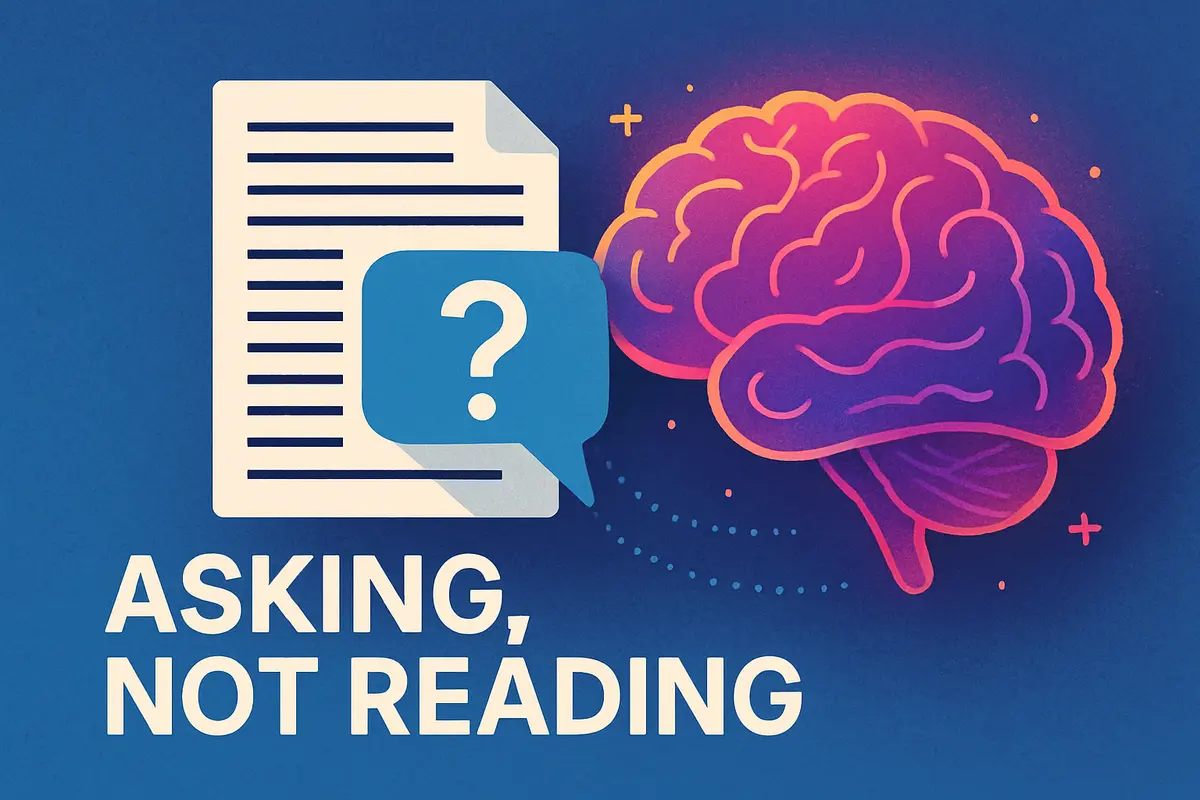
Most approaches to training large multimodal models (LMMs) for document understanding rely heavily on transcription — converting every page or image into text and then analyzing that text. ByteDance’s recent research challenges this orthodoxy with a simpler but more effective technique: training a 7B parameter LMM by having it answer questions directly on long, image-heavy documents instead of forcing it to transcribe all content first.
The model learns to locate relevant passages and reply to queries within documents that are up to four times longer than anything in its training set. This method leverages the model’s ability to focus on meaningful segments rather than digesting volumes of raw textual input, which often includes noise and irrelevant data. Notably, it outperforms larger models even with far fewer parameters.
What they demonstrate is a subtle but important shift: the training objective matters as much as model scale or architecture. By framing the task as question answering, the model internalises context and relevance more efficiently, sidestepping the costly and error-prone step of full transcription.
This is a vital insight for anyone building or evaluating document AI solutions. Bigger and more data-hungry isn’t always better, especially when smarter training strategies unlock better performance with less compute. The widespread fixation on scaling alone overlooks gains achievable through task reformulation.
Models that learn by asking, not reading, are quietly rewriting the rules of long document comprehension.
Leave a Reply