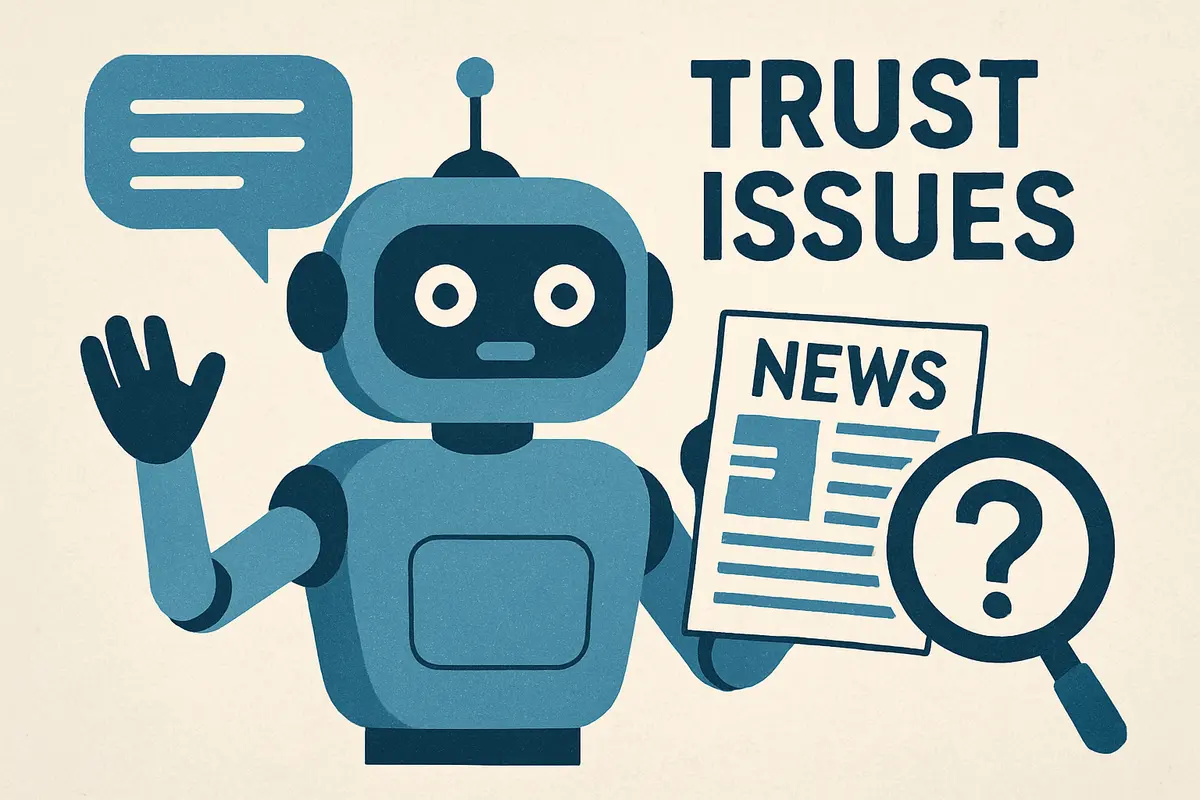
AI chatbots delivering news are gaining ground, with 10 percent of people globally using them weekly—up from 7 percent just a year ago. But that growth isn’t matched by trust or engagement. Only 4 percent actually click through to the original sources, and skepticism around accuracy remains high.
This exposes a critical tension in how AI chatbots handle information. While they excel at summarising content quickly, the lack of verifiable source linking means users often consume filtered or interpreted news with no easy way to scrutinise the original. The convenience trade-off here is a loss of transparency.
From a technical perspective, these chatbots generate responses by referencing vast data patterns rather than verifying facts in real time. That means errors, bias, or outdated information can propagate undetected, making trust harder to earn.
For leaders considering AI as a communication channel or information tool, the implication is clear: adopting AI chatbots for news consumption or delivery should not substitute for maintaining rigorous source verification and transparency. Without these safeguards, the wider adoption of AI news bots risks eroding trust in both the medium and the messages conveyed.
The real story isn’t that more people use AI chatbots for news—it’s that trust remains the biggest obstacle, unaddressed by the rising adoption figures.
Leave a Reply