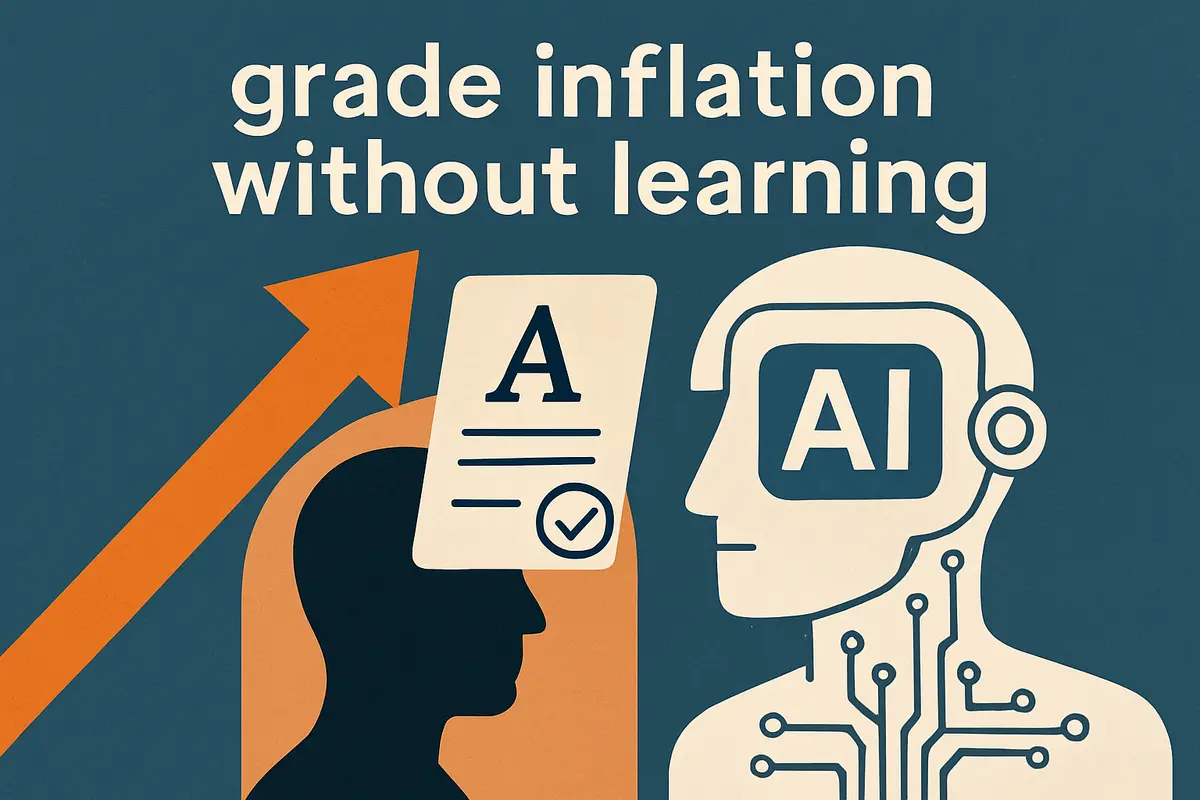
A recent comprehensive study from UC Berkeley looked into more than half a million student grades and uncovered a troubling pattern post-ChatGPT launch. Courses heavy on writing and coding assignments saw a significant grade bump, but this uplift was mainly confined to homework. The data suggests not that students are learning better, but that AI tools are effectively doing their assignments for them.
This distinction matters a lot for anyone curious about the real impact of AI on education and skills development. If AI is simply serving as a ghostwriter or coder outsourcing tool, the grade inflation doesn’t translate into genuine understanding or capability growth.
For founders and CTOs thinking about internal upskilling or training frameworks, this finding should raise a caution flag. Relying on generative AI as a shortcut risks creating a workforce with inflated self-assessment and shallow skills. It’s not just academic; the same outsourcing dynamic could migrate into your code reviews or technical documentation if you’re not vigilant.
This also poses questions about assessing talent and competence — if AI conceals gaps rather than highlights them, hiring and training decisions will become riskier and more opaque.
The core takeaway is that AI-powered productivity gains should be measured by output quality and true skill growth, not just speed or volume. Otherwise, we’re just inflating numbers without improving substance.
Leave a Reply