
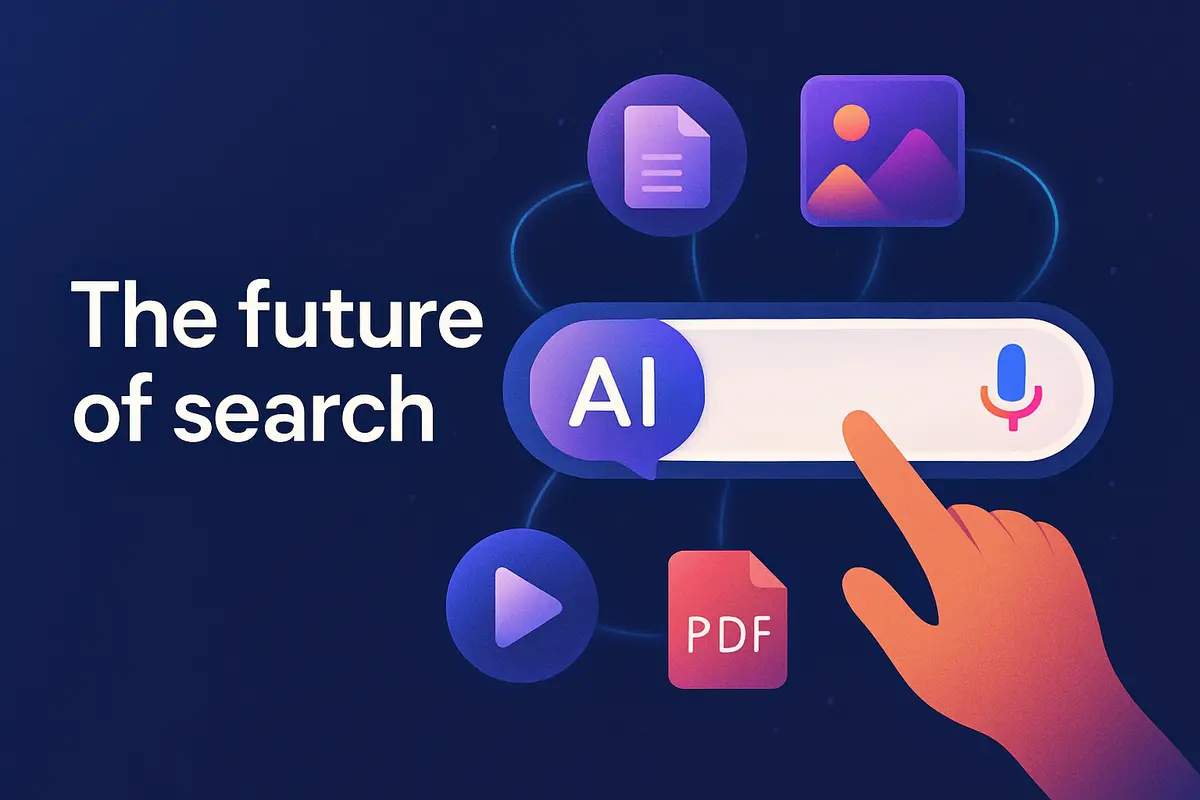
Google’s redesign of its search box marks the end of 25 years of keyword-driven queries and ushers in a new era of multimodal, conversational AI interaction. For SMEs, this is less about flashy tech and more about a shift in how their customers will seek information and make purchasing decisions.
The new interface supports text, images, PDFs, videos, even open Chrome tabs, making search a richer, ongoing conversation rather than a one-off keyword hit. AI Mode and AI Overviews are merged, removing the old friction between traditional search and AI responses. This seamless experience means users will demand more sophisticated answers, pushing businesses to adapt their digital presence accordingly.
For SMEs, the critical takeaway is that SEO and customer engagement strategies must evolve quickly. Keyword stuffing and short queries lose relevance as search AI understands detailed, natural language questions and cross-modal inputs. Content quality that anticipates complex inquiries is now what drives visibility.
The infrastructure behind the redesign, using Google’s Gemini 3.5 Flash AI model, promises speed and scale, signaling that this isn’t an experimental add-on but the standard future. New interactive visuals and mini-apps generated on the fly could help SMEs in niche fields to better engage users without heavy development overhead.
Proactive AI agents monitoring web conditions open practical automation avenues, like market updates or inventory alerts, for SMEs willing to experiment with emerging AI subscriptions.
This transition also hints at increased complexity in advertising targeting, where conversational context rather than isolated keywords guide bids and budgets.
In essence, SMEs must stop optimizing for keywords and start building for conversations—Google’s redesign bets billions on this shift becoming the new default. Ignoring it risks being invisible in the next generation of search.
Leave a Reply