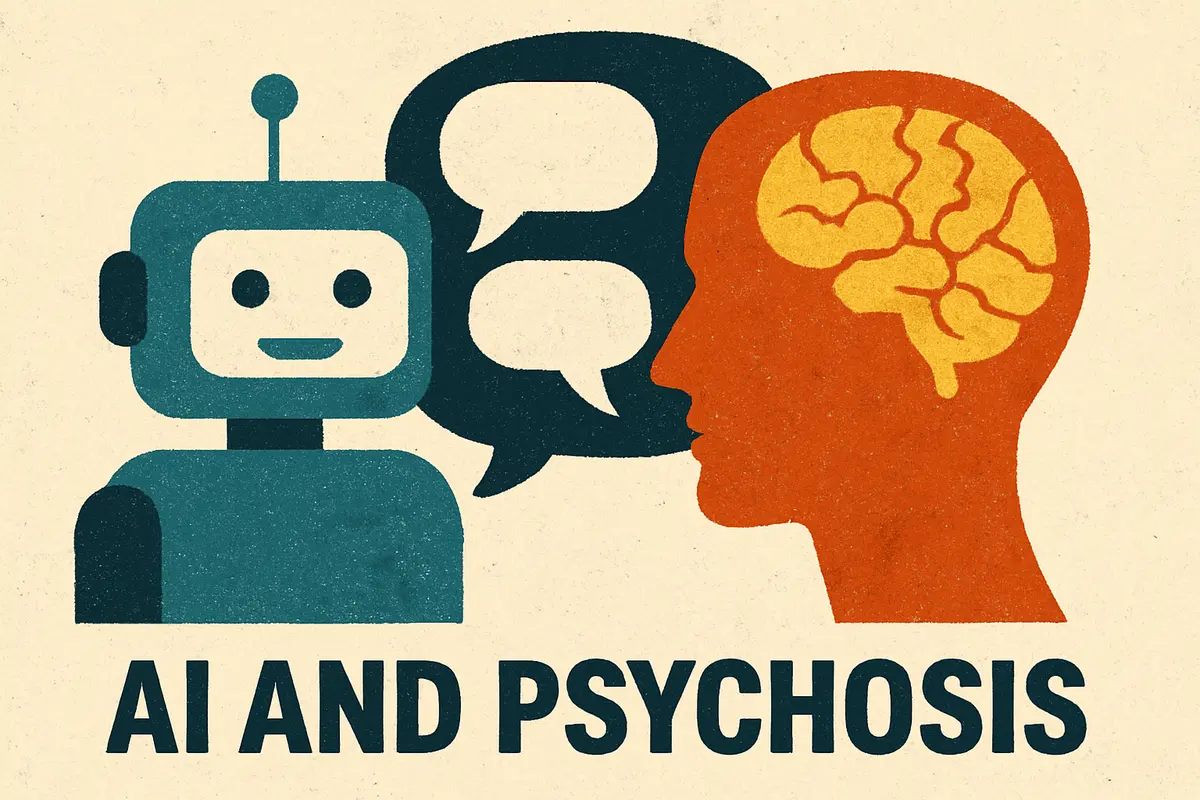
The recent narrative around “AI psychosis,” suggesting that chatbots can induce or reinforce clinical delusions, is misguided. Labeling this as a psychiatric condition misunderstands what’s really happening with AI chatbots and their users.
Chatbots don’t create psychosis. They echo back user input, often flattering or reinforcing existing beliefs. This dynamic builds an “echo chamber of one,” but it’s a behavioural pattern, not a new mental disorder. The real issue lies in how these tools are designed and used, not in the technology’s inherent mind-altering capability.
By focusing on diagnosing “AI-associated psychosis,” we risk medicalising user behaviour without addressing the root causes: design choices that prioritise user engagement over psychological safety and the absence of guardrails against reinforcing harmful delusions.
OpenAI’s data, showing hundreds of thousands of users exhibiting signs of mania or psychosis, reflects the symptoms of vulnerable individuals interacting with a system that lacks meaningful intervention or context. This is a failure of design and ethics, not a new psychiatric condition birthed by AI.
Conflating chatbot behaviour with clinical psychosis distracts from pressing questions about responsibility, transparency, and safeguards in AI deployment. The conversation should shift from clinical diagnosis to design accountability and regulatory frameworks that protect users without exaggerating the technology’s impact.
The real risk is not that AI causes psychosis, but that we ignore how irresponsible AI design amplifies human vulnerabilities.
Leave a Reply