
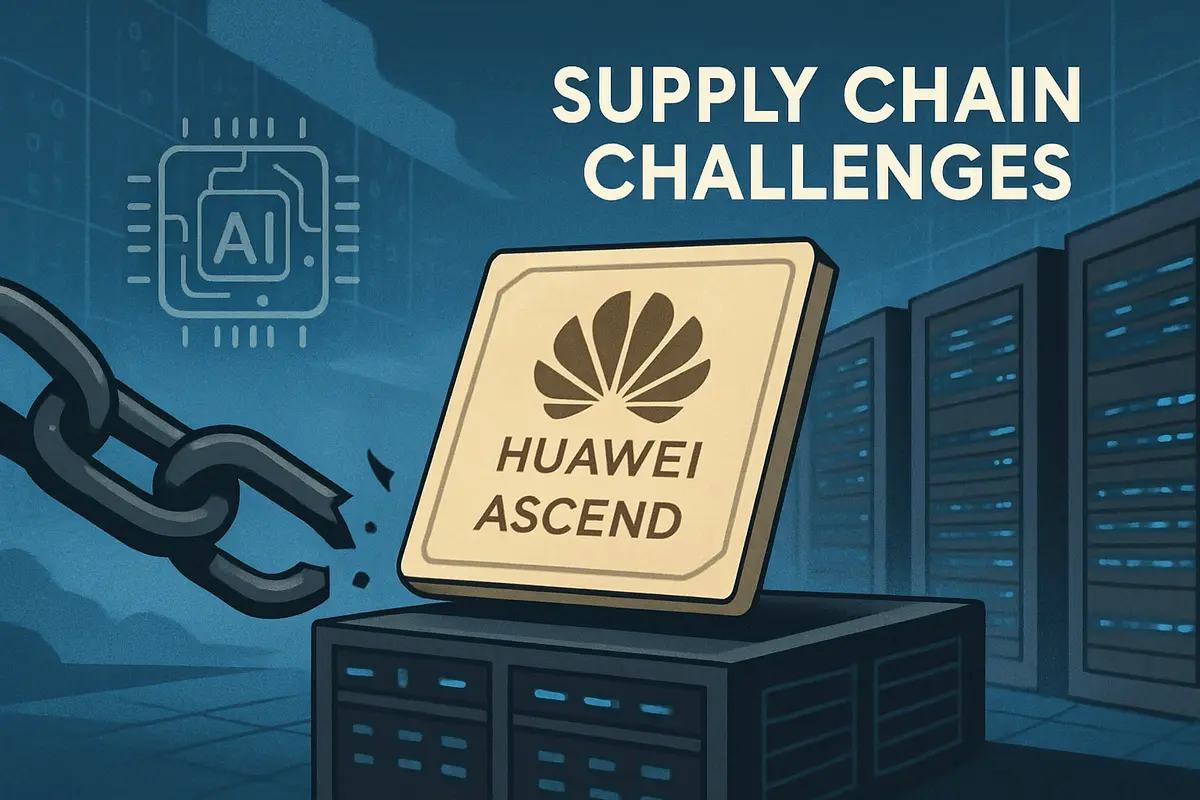
Deepseek’s plan to deploy 160,000 Huawei Ascend-950DT chips in a dedicated Inner Mongolia data center sounds impressive at face value. But the real story here isn’t the scale—it’s the production bottlenecks that will delay delivery by over a year.
Huawei’s chip ambitions hit a familiar snag: global and geopolitical supply chain fragility combined with manufacturing constraints. Despite China’s push for self-reliance in AI infrastructure, the timeline for mass chip deployment exposes just how farHuawei still is from matching established players in both supply reliability and ecosystem maturity.
This cluster is meant solely for inference. Training, the more computationally intense process, remains off-limits for now on this hardware at scale. That distinction matters; it’s a tacit admission of the Ascend lineup’s current positioning more as an inference workhorse than an all-round AI powerhouse.
For founders weighing their infrastructure bets, this confirms that relying on vendor roadmaps tied to constrained chip production introduces serious risk. It’s a reminder that raw chip counts don’t translate to immediate value if delivery schedules slip and capabilities are limited.
In other words, don’t be dazzled by big numbers when supply chains and real-world workloads tell a different story.
Leave a Reply