
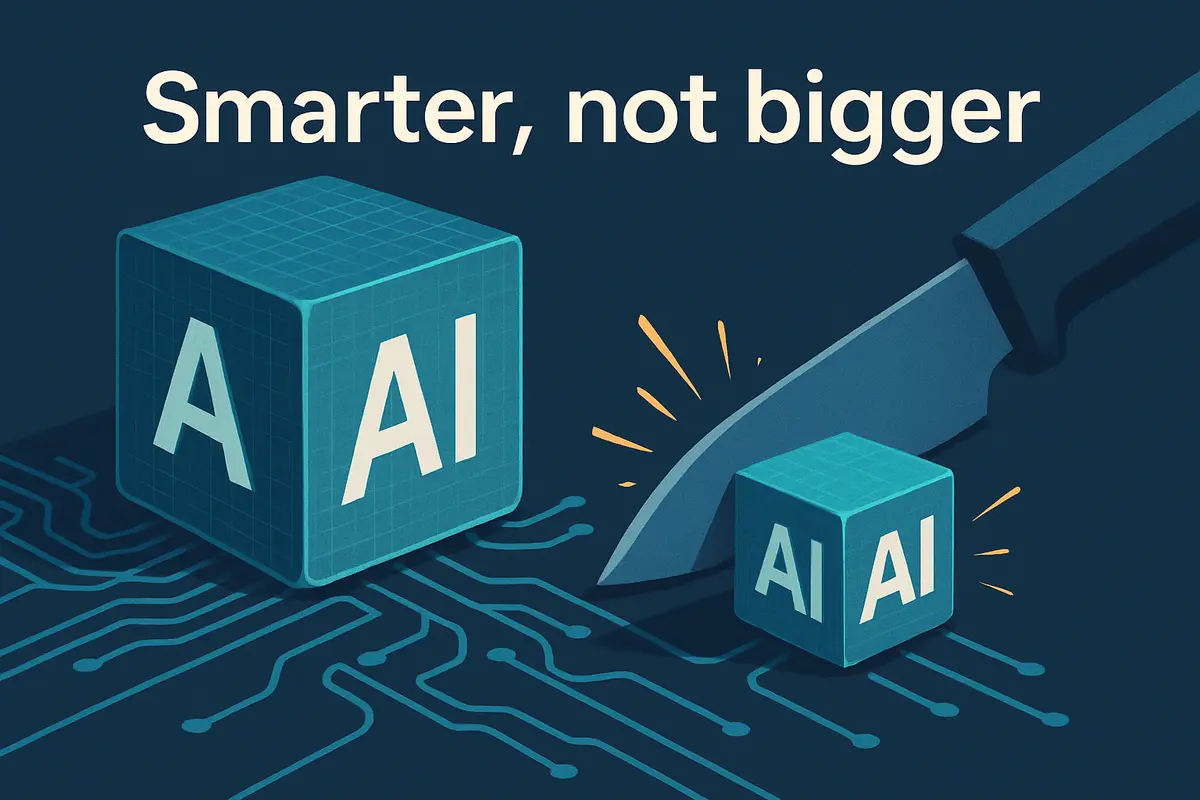
Large AI models get most of the attention, but Poolside’s Laguna S 2.1 disrupts this narrative by proving that smaller, smarter models can outperform sheer scale.
Laguna S 2.1 doesn’t rely on brute force. Instead, it’s trained to self-verify, iteratively correct mistakes, and persist longer in complex tasks—traits often ignored in the race for bigger models. This design allows it to beat much larger rivals on several coding benchmarks, demonstrating efficiency that’s easier to overlook.
What makes this particularly interesting is the model’s cost-effectiveness. Poolside reports it solved a decades-old math problem—left open since 1975—for under 10 cents. That’s a compelling data point for anyone questioning the ballooning costs associated with giant AI models running in cloud environments.
For companies with limited budgets and pressure to optimise both speed and accuracy, this approach highlights a new trade-off: intelligent design over massive scale. It also hints at a future where open-weight, smaller models, tuned for iterative problem-solving, gain traction against proprietary giants.
Laguna S 2.1 is a reminder that bigger isn’t always better in AI. Sometimes, the sharper knife is the one that keeps sharpening itself.
Leave a Reply