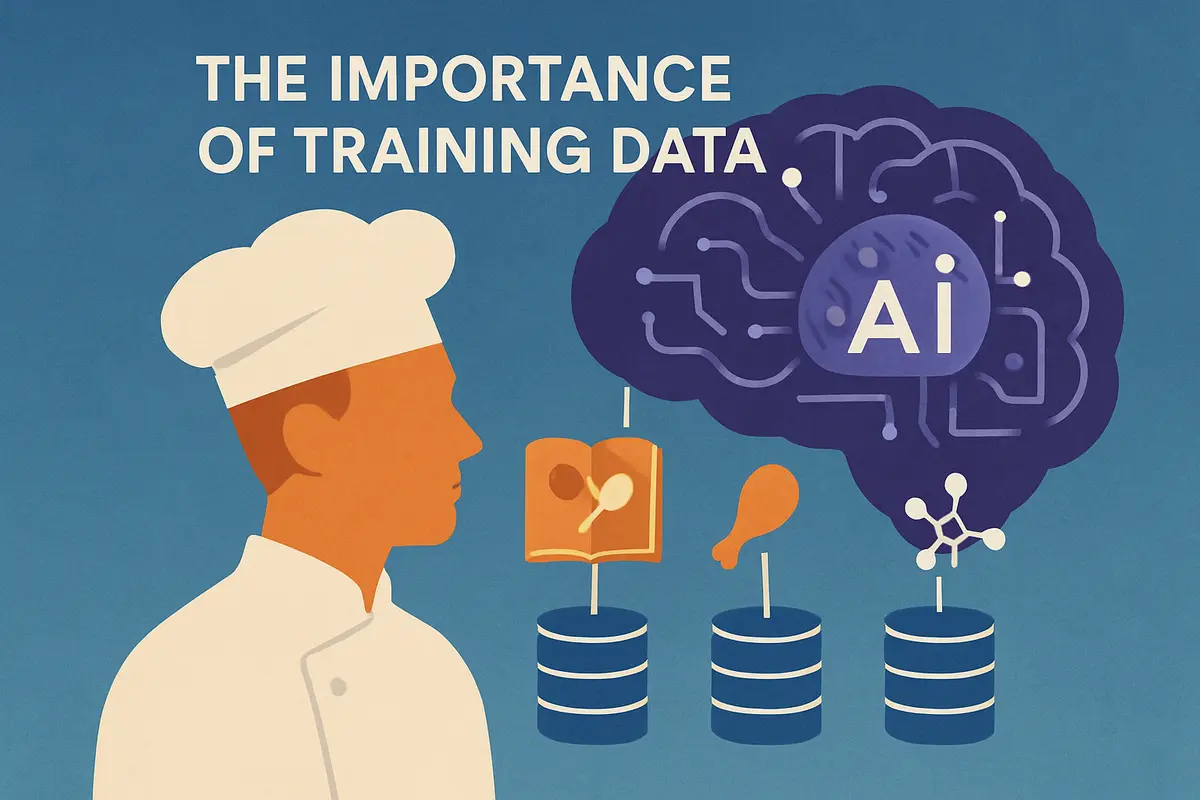
Most discussions about AI in culinary arts assume the model and technology are the decisive factors for quality results. But Kaikaku.AI’s “Epicure” demonstrates it’s the training data that truly shapes AI’s culinary intelligence.
Their approach uses three AI models trained on either massive recipe databases or molecular flavor data. Each model delivers notably different ingredient pairings for something as classic as chicken—reflecting whether it understands cultural cooking patterns or chemical affinities.
Remarkably, the model trained purely on chemical data classifies taste and nutritional value better than those trained on four million curated recipes across multiple languages. That’s despite never seeing explicit taste or nutrition labels during training.
This flips a common assumption: advanced algorithms alone don’t guarantee better recommendations. Instead, the nature of what AI learns from—quantifiable chemistry or human cooking tradition—drives its results. For founders or CTOs looking at AI-powered culinary or product recommendation tools, this signals a need to scrutinize training data, not just the AI architecture or hype around model size.
Moreover, the industry should look beyond surface-level novelty. When AI can expose hidden patterns invisible to human chefs, like molecular compatibility, it opens opportunities—and risks—for innovation in food tech and nutrition.
The real lesson? In AI, what you feed your model defines its intelligence far more than which model you choose.
Leave a Reply