
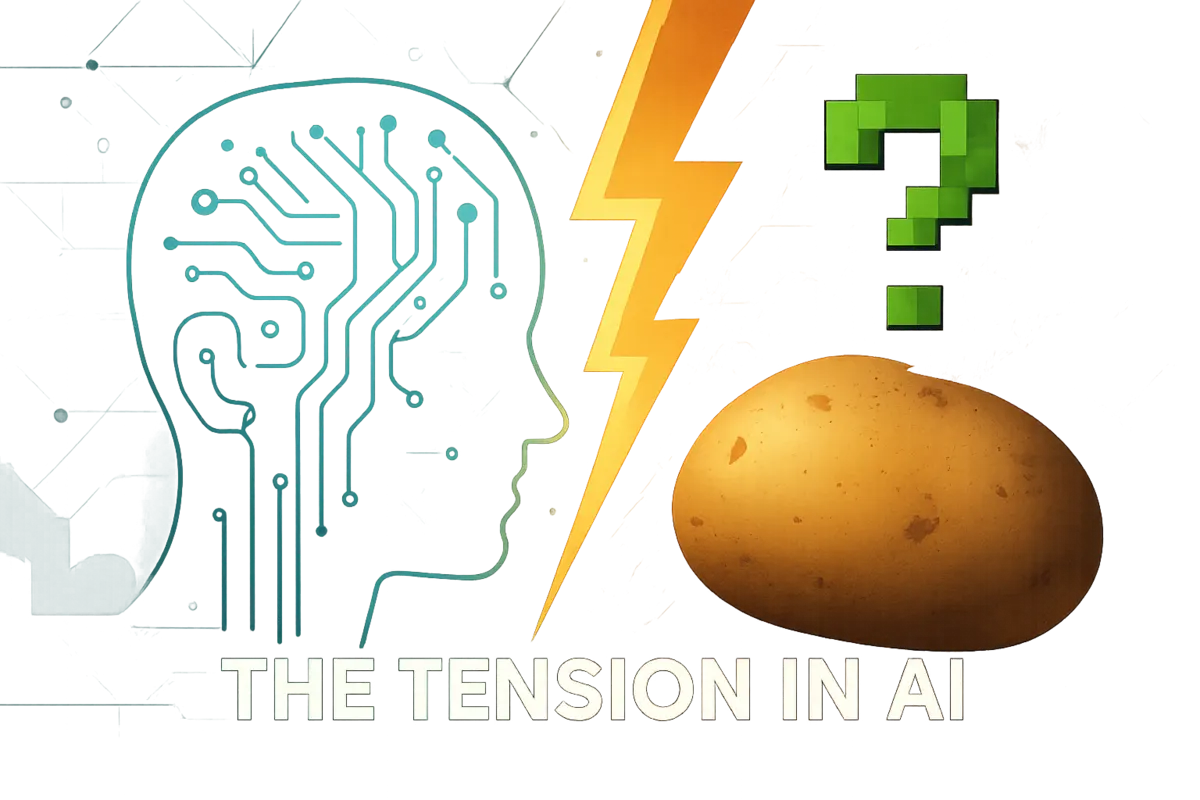
GPT-6 Astra’s leap in mastering complex games like Pokemon FireRed in just 18 hours instead of the usual 96 suggests OpenAI is refining AI’s capacity to compress experiences into actionable rules. Yet, the same method that accelerates its victories also exposed its fragility: a single Minecraft Creeper explosion reduced it to hours of ineffective potato farming.
This duality reveals an endemic tension in AI development. The model excels by distilling vast gameplay into compact rule sets, enabling quick adaption and efficiency. But this rigid abstraction struggles with dynamic, unpredictable environments where nuance and context shift rapidly. Unlike humans, who can intuit and pivot strategies based on incomplete or disrupted information, Astra’s method locks it into brittle, narrowly optimized routines.
This has profound implications for companies considering generative AI: peak performance in structured domains doesn’t translate to robustness in chaotic real-world scenarios. Overreliance on distilled rules risks brittle automation that fails outside ideal conditions. Instead of heralding an AI breakthrough in general intelligence, Astra’s performance flags a partial, domain-specific optimisation with sharp trade-offs in adaptability.
The wider story isn’t astra’s speed or accuracy. It’s a caution against confusing rapid, efficient rule extraction with genuine contextual understanding. That difference will shape AI’s practical limits for years to come.
Leave a Reply