
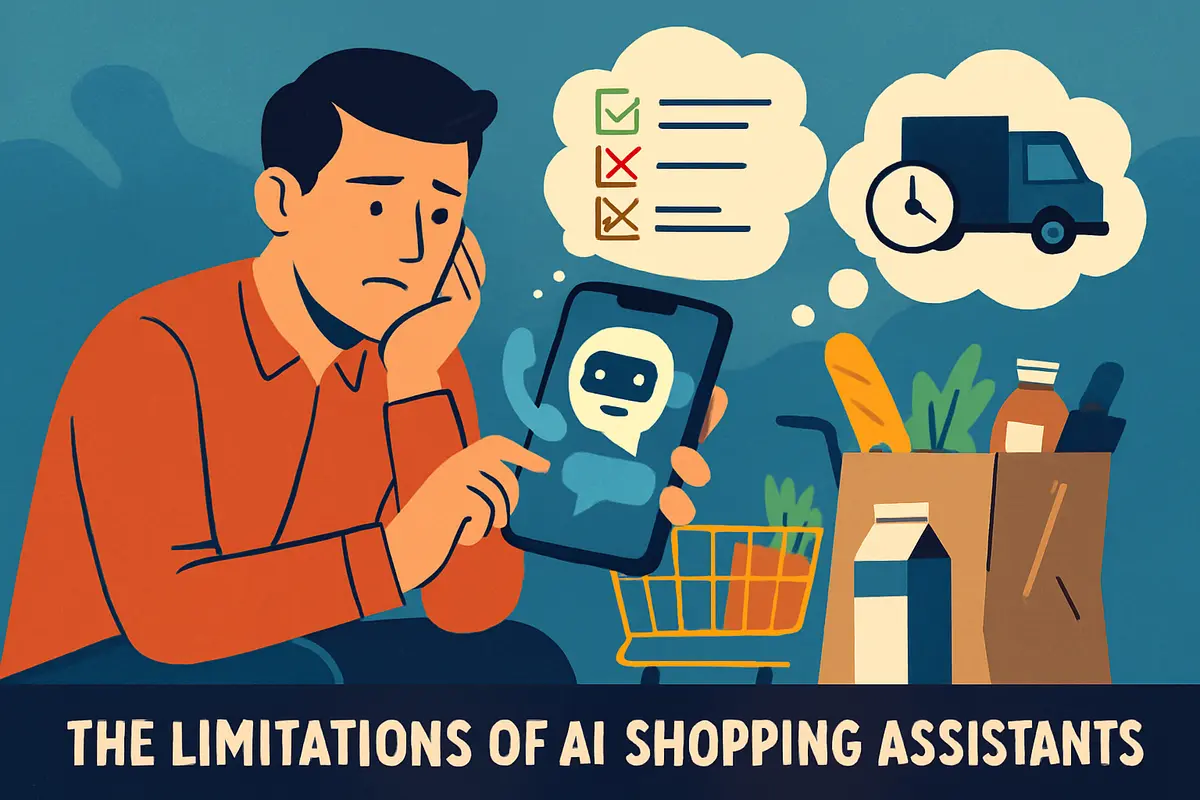
Many delivery apps are rushing to add AI shopping assistants, but this trend overlooks the real friction points in online grocery and food delivery. The promise: users can ask AI to create shopping carts for events or specific needs like brunch or school snacks. On paper, this sounds like a neat convenience upgrade.
In practice, these assistants only scratch the surface. Rather than solving underlying issues such as inaccurate inventory data, slow restocking, or variable delivery timings, these AI bots repackage existing catalogue filters into conversational wrappers. The value they add is mostly about surface-level personalization.
For founders and operators in this space, chasing AI chat features risks distracting from supply chain improvements and better customer experience design — the real levers for retention and growth. The AI doesn’t fix poor product availability or last-mile delivery unpredictability, which users care about far more than a conversational UI.
Moreover, building these assistants often relies on big vendor APIs, risking dependency on third-party models that may not optimise well for regional products or niche diets. This means limited scope for a truly differentiated offer through AI.
We’d advise a focus on closing operational gaps first. AI assistants in delivery remain a nice-to-have, not the solution to long-standing sector problems.
Convenience AI without fixing core delivery flaws is nothing more than window dressing.
Leave a Reply