
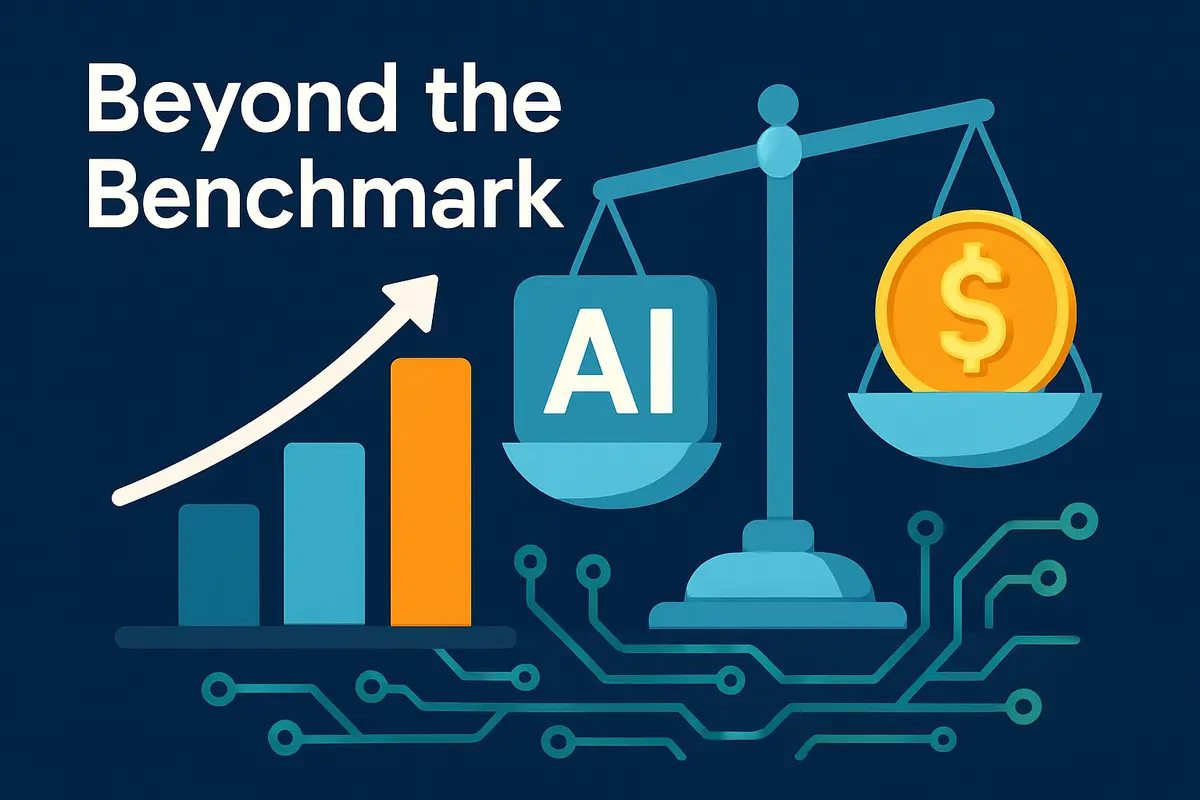
Alibaba’s latest model, Qwen3.8 Max, has made waves by scoring 56 on a popular AI benchmark — a solid 10 points higher than its predecessor, Qwen3.7 Max. At first glance, that looks like real progress. But the market is more nuanced than headline scores.
What often gets overlooked is the cost-performance ratio. Kimi K3, another AI model often flying under the radar, scores slightly higher but costs 25 percent less than Qwen3.8 Max. For companies, especially those outside the big tech league, this matters far more than a few points on an index.
This points to a recurring pattern in AI development: headline improvements tend to come at disproportionate cost increases. The incremental gains delivered by models like Qwen3.8 Max may be impressive on paper but don’t always translate into clear business value when budget constraints bite.
Moreover, chasing the latest shiny model can lock companies into higher pricing tiers or vendor dependency, with diminishing returns on productivity. The smarter move is evaluating model efficiency, cost, and fit for your specific use case, rather than headline scores alone.
In essence, a higher benchmark score is just one piece of the puzzle. The true test is balancing performance improvements with operational costs — and right now, Qwen3.8 Max hasn’t tipped that balance in its favour.
Leave a Reply