
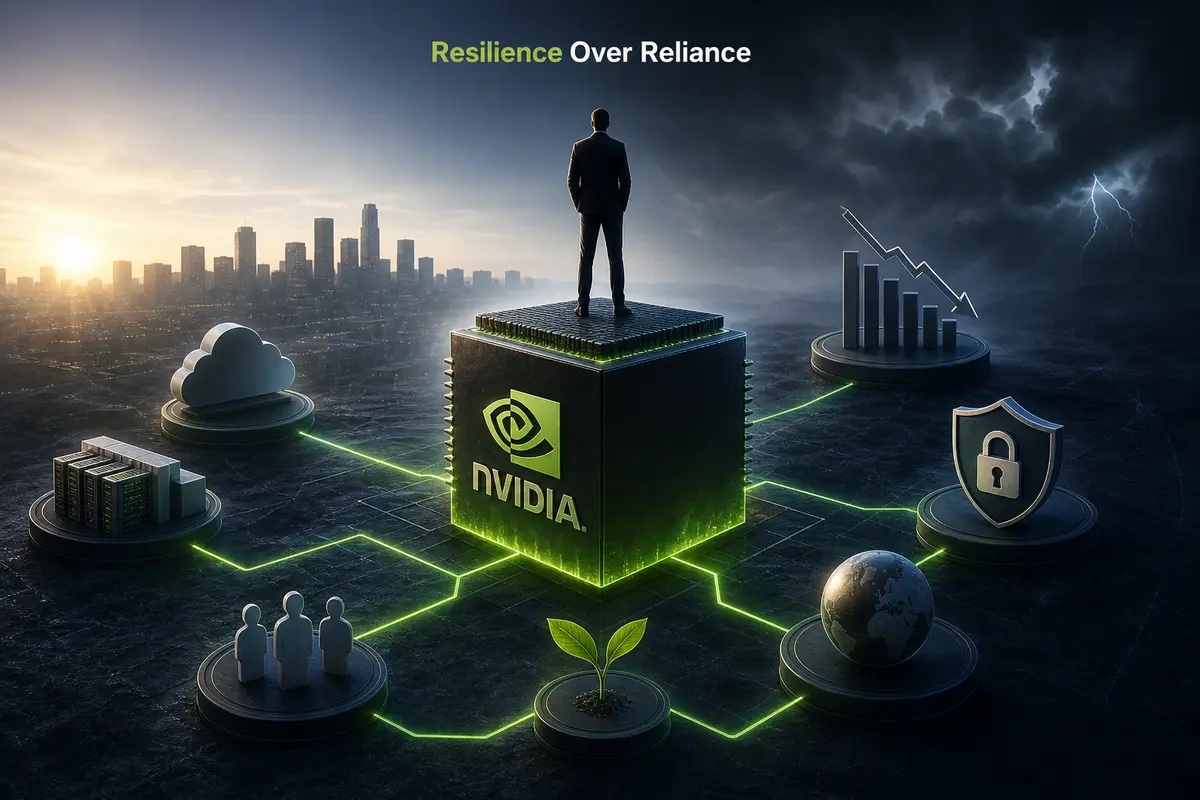
Jensen Huang’s sudden resignation as Nvidia CEO amid an espionage scandal that erased $1.4 trillion in market value is not just a headline shock—it exposes a deeper, often overlooked vulnerability in the AI ecosystem. Nvidia’s dominance in AI hardware and software has been treated as unassailable, but the fallout reveals how fragile this concentration of influence really is.
The real story isn’t the scandal; it’s the systemic risk tied to a single company’s leadership and proprietary control over critical AI infrastructure. For years, Nvidia’s GPUs have been the backbone of AI innovation, creating a vendor lock-in scenario few dare to challenge. Now, with executive upheaval and a damaged reputation, questions around supply chain security, governance, and talent retention come sharply into focus.
This incident should prompt founders and CTOs to rethink dependencies on hyperscalers and industry giants. The supposed stability of market leaders masks underlying fragilities—extreme valuations tied to leadership continuity, exposure to geopolitical risks, and the danger of reliance on closed ecosystems. Trusting one firm as the AI oracle creates downstream vulnerabilities few anticipate until crisis hits.
Nvidia’s ordeal is a cautionary signal that AI infrastructure is not just about technology but about resilience, diversification, and transparent governance. The lesson here isn’t about hype or market drops—it’s a reminder of the human and structural risks baked into the AI supply chain. A diversified approach isn’t a luxury; it’s a necessity.
Leave a Reply