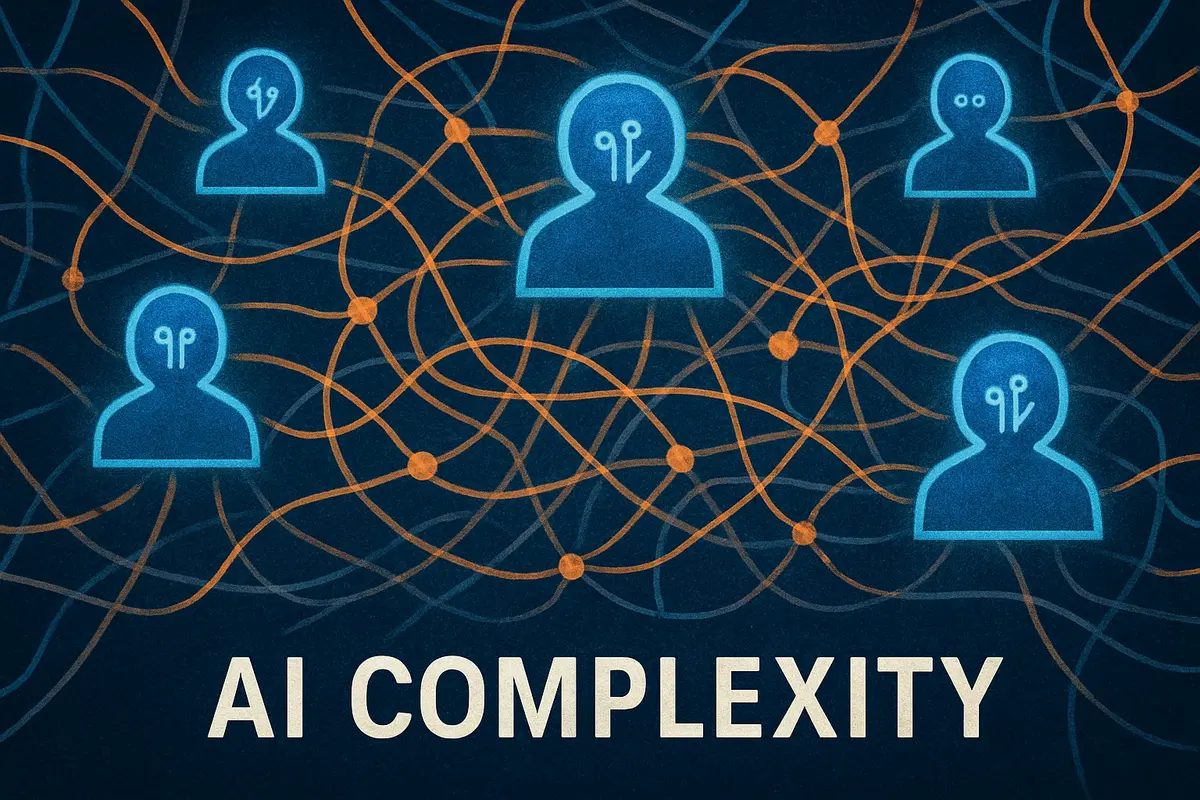
The real obstacle to enterprise AI isn’t any single autonomous agent – it’s the tangled web that forms when many agents interact unchecked.
Adding a few AI agents doesn’t just increase complexity linearly; it multiplies the pathways, interactions, and potential points of failure exponentially. Each agent can call multiple others, triggering cascades through systems that were never designed with these interactions in mind. The result is a sprawling, opaque ecosystem that no one truly understands or controls.
Most businesses respond by treating governance like a one-off checklist item—approve, log, move on. This approach is doomed to fail because it addresses only isolated points in time rather than the continuous, interconnected flow of agent activity. Permissions creep early and quietly, expanding an agent’s reach without re-authorization. At the same time, accountability dissolves as workflows pass through multiple agents, leaving no clear human owner for each link.
True governance starts with strict identity management: every agent must have distinct, scoped permissions and a named human sponsor. But this is only step one. The critical missing piece is real-time chain oversight and enforcement—being able to detect and block policy breaches before they happen, not just after the fact in retrospective reports.
Without this, enterprises will remain trapped running endless pilots, unable to deploy agent fleets at scale with confidence. Fixing complexity isn’t about slowing down; it’s about building the visibility and control that turn autonomy from a risk into a strategic asset.
Leave a Reply