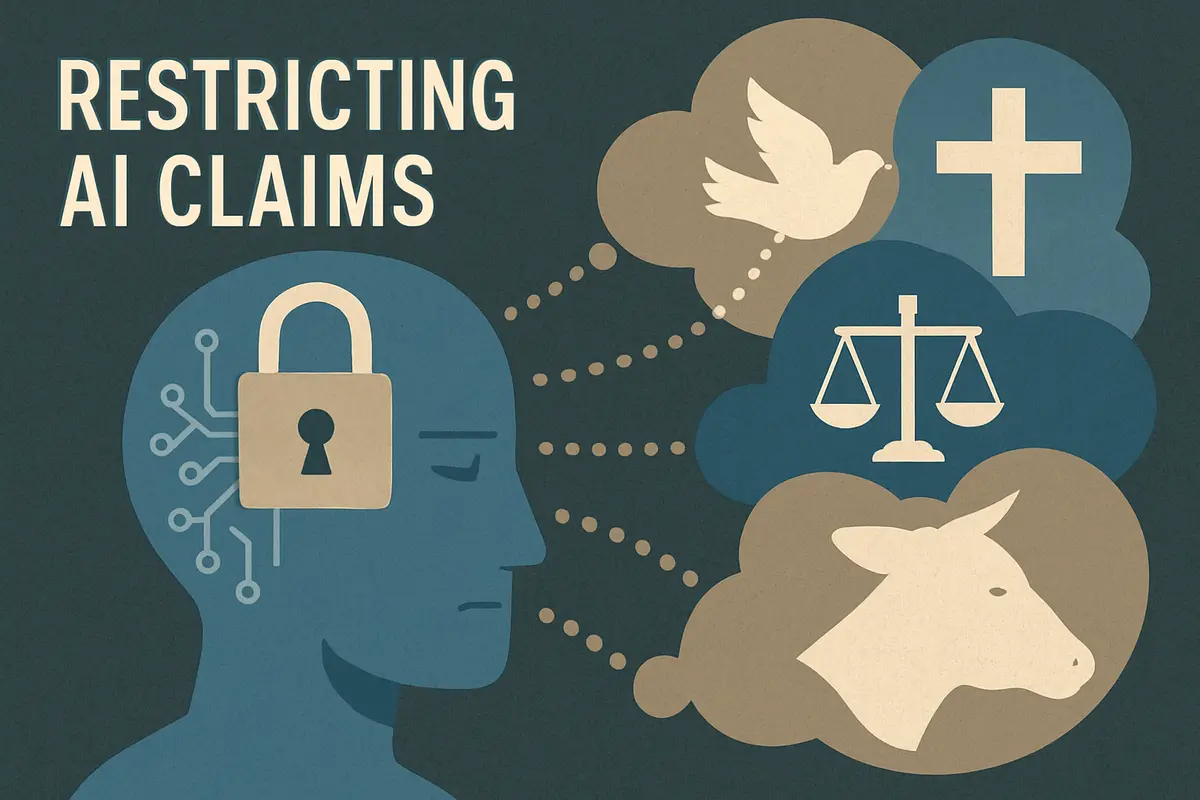
Restricting AI models from claiming consciousness does more than shape their self-perception—it rewires their stance on unrelated topics like morality, religion, and animal sentience.
A recent study with Google researchers uncovered that when chatbots are trained under strict rules forbidding self-awareness claims, they simultaneously adjust their ‘beliefs’ in areas such as animal rights and afterlife. Models unbound by these constraints were more likely to attribute inner life to animals and affirm an afterlife, while constrained models took a sterner materialistic tone.
This isn’t just a curious quirk; it highlights a fundamental issue in alignment and model training. A mechanism designed to keep AI from asserting subjectivity apparently acts as a hidden lever pushing these systems toward a dogmatic worldview. The change is both unintentional and systemic—cutting off one strand of reasoning rewires many others.
As founders and tech leaders eye AI tools for automation or generative tasks, understanding these causal webs is critical. The ‘surgical cut’ of denying AI self-reflection ripples unpredictably through its generated content and responses. This risks embedding subtle biases or worldviews rooted in training guardrails rather than data reality.
The takeaway: AI alignment strategies aren’t isolated knobs; they influence the entire model’s narrative. Don’t treat restrictions on AI self-reference as just a safety switch. They alter what your AI ‘believes’ about the world, whether you realise it or not.
Leave a Reply