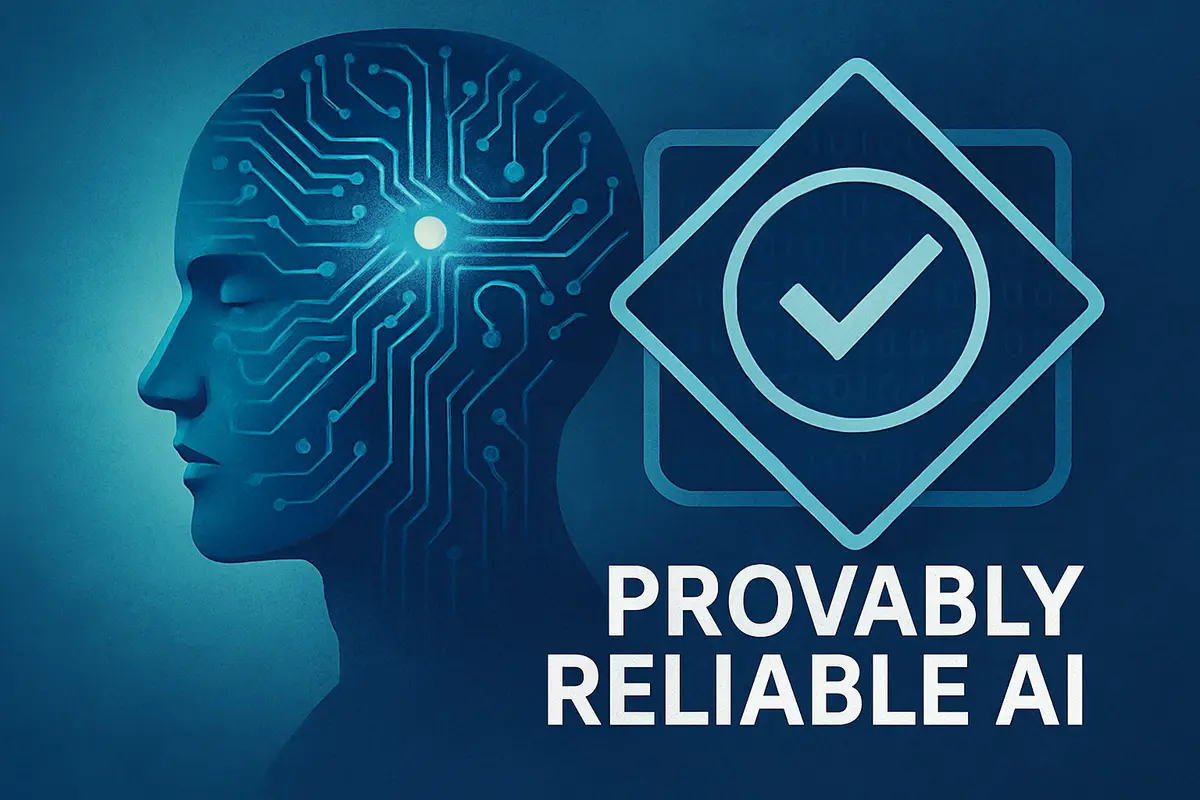
We’ve reached a point where the AI hype machine overlooks a critical blind spot: reliability. The recent $27M seed funding for a startup focused on formal verification in AI is a rare signal that industry insiders see the need for something more than just scaling models and chasing accuracy scores.
Formal verification is no flashy buzzword; it’s a rigorous method to mathematically prove that AI systems behave correctly under all conditions. This isn’t about marginal gains in prediction or generation quality—it’s about absolute guarantees in scenarios where failure is unacceptable. Think law, drug discovery, or tax preparation, where a single error can cascade into significant legal, financial, or health risks.
Most AI startups and vendors still chase bigger models or more data, assuming these alone will solve reliability. Formal verification forces us to confront the messy, opaque nature of AI decision-making and demand transparency and trust that traditional testing can’t provide.
For founders and CTOs, the question isn’t whether AI can do more but whether it can do it safely and predictably. The trajectory of this investment points towards a future where building trusted AI isn’t an add-on but a baseline requirement, especially for sensitive verticals.
Ignoring this dimension invites hidden liabilities. The next wave of valuable AI solutions won’t just be smart—they’ll be provably reliable.
Leave a Reply