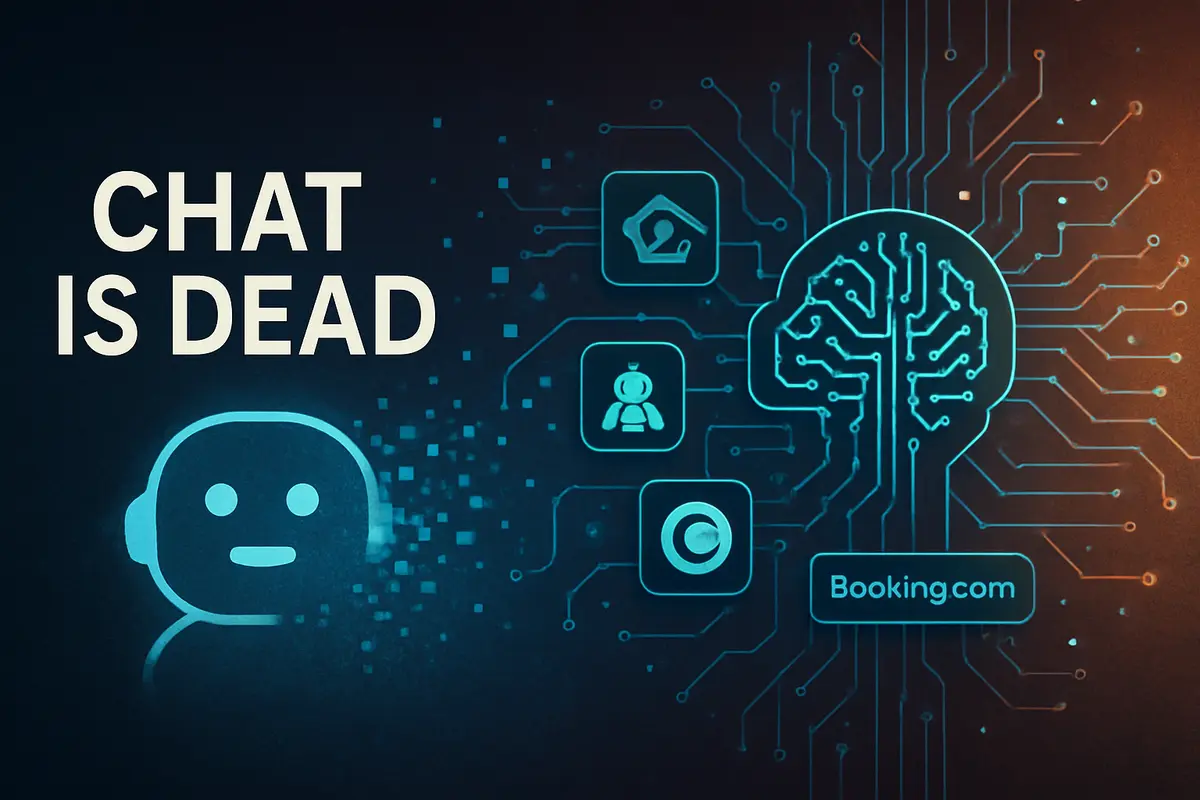
OpenAI’s internal shift from chatbots to autonomous agents is less a leap forward and more a strategic pivot loaded with risks and trade-offs. They proclaim “chat is dead” and envision ChatGPT evolving into a superapp that juggles coding tools, AI-driven agents, and third-party integrations like Canva and Booking.com.
The big picture? Moving away from lightweight chat interfaces towards agents that execute tasks independently and orchestrate services. But this isn’t just about better UX or smarter AI. It’s a bid to lock users deeper into OpenAI’s ecosystem, raising the stakes on vendor lock-in and integration complexity.
For companies already wrestling with API sprawl and software interoperability, this could exacerbate headaches. The superapp will demand significant integration effort and might reduce flexibility by funneling workflows into predefined agent paths.
Technically, what does this mean? Chat interfaces excel at open-ended, human-directed interaction but lack proactive task execution. Agent apps promise autonomy but hinge on brittle assumptions about user intent and context. The failure modes of such agents—performing incorrect tasks or misinterpreting instructions—could degrade user trust faster than a simple chatbot’s misfires.
For founders and tech leaders, this signals a deeper trap behind the glitz of autonomy: a future where your software stack is less modular, more opaque, and more dependent on a single vendor’s roadmap. Evaluate carefully before betting your operations on agents that might be super on paper but tricky to control in the wild.
Leave a Reply