
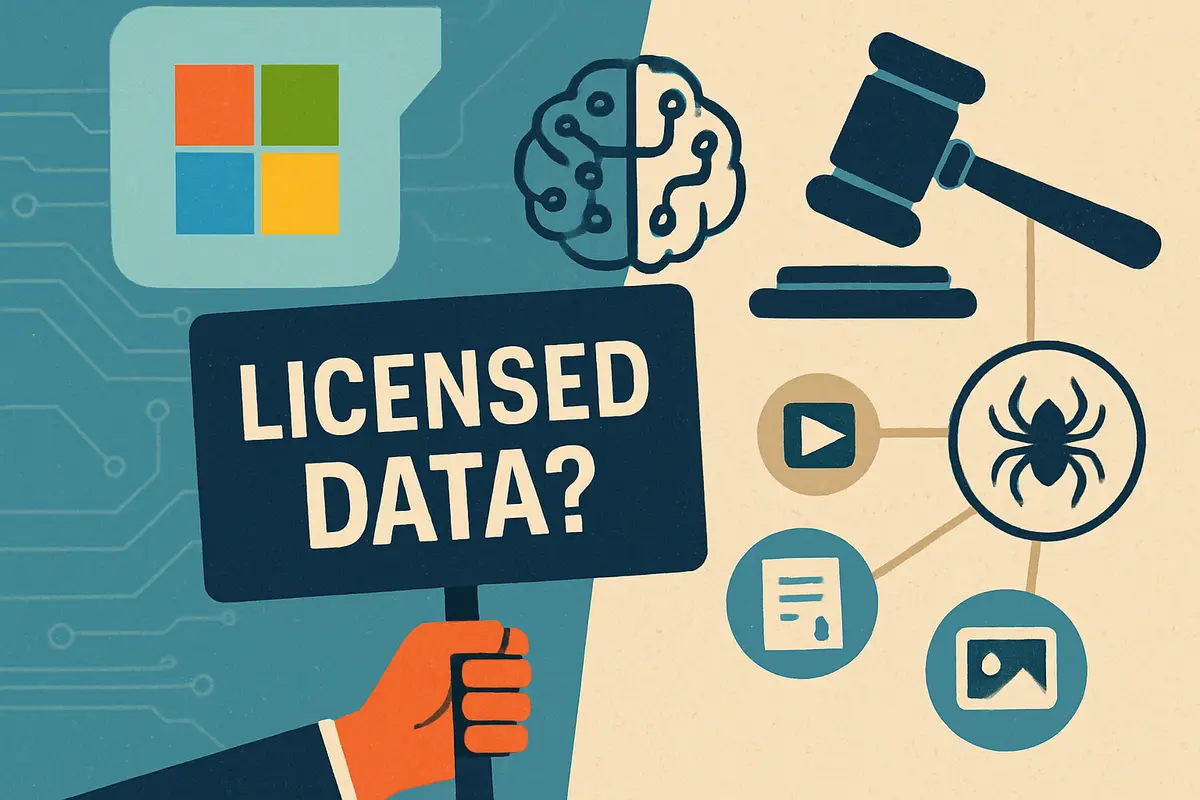
Microsoft has positioned its new MAI models as trained exclusively on “enterprise grade, clean and commercially licensed data.” This narrative aims to set the company apart from competitors who rely heavily on unlicensed web data collections such as Common Crawl. However, upon closer examination, Microsoft’s data sourcing approach is not fundamentally different from other AI labs that use large-scale web crawls without explicit licenses.
The central issue lies not only in the use of unlicensed content but also in the gap between marketing claims and reality. Microsoft relies on broad interpretations of fair use, placing the responsibility on website owners to block crawlers if they do not want their content ingested. This method is industry-standard but conflicts with claims of exclusively licensed data.
For enterprises trusting these vendor assurances, such discrepancies pose significant challenges. The promise of morally and legally clean datasets is vital for compliance, reputation management, and intellectual property respect. When the data provenance is unclear, concerns about model reliability, potential legal risks, and ethical considerations arise.
This situation is not an isolated incident but highlights a persistent tension in large model training: balancing commercial hype with factual data practices. Companies considering AI partnerships must rigorously assess data sourcing claims and be ready to question common industry narratives to safeguard their interests.
Leave a Reply