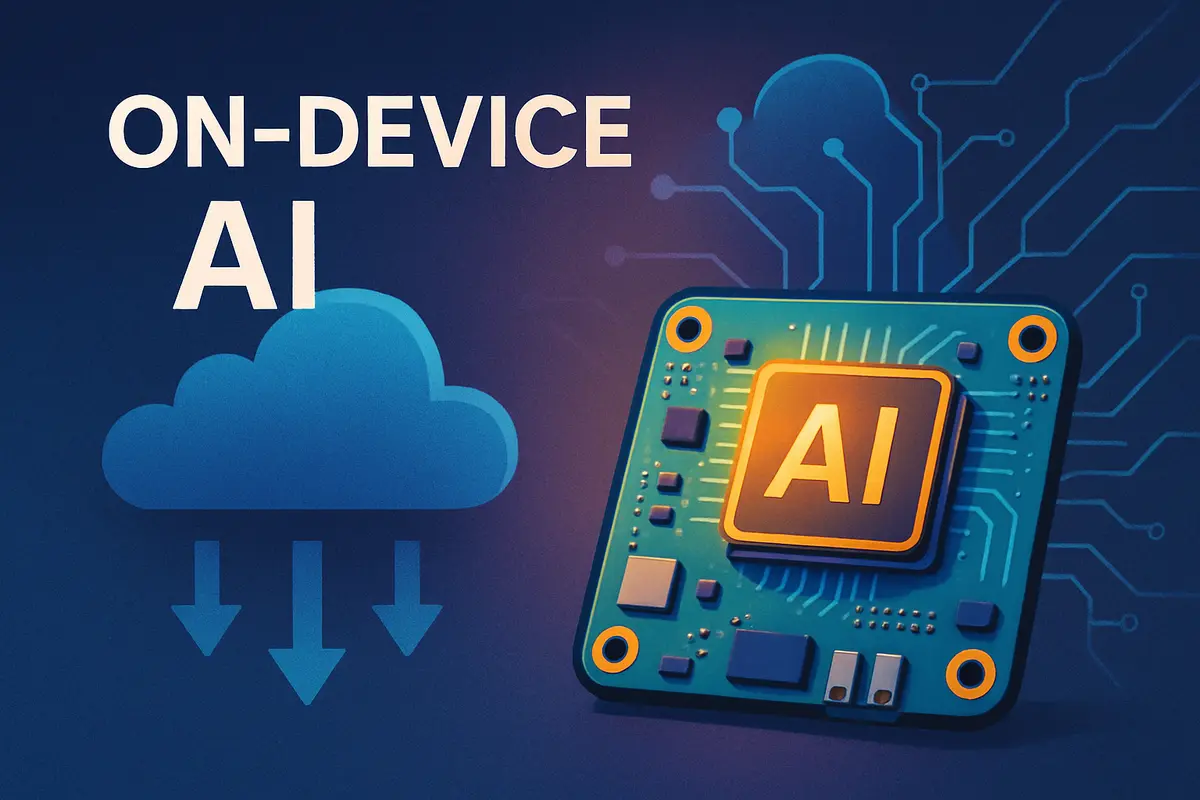
Google’s launch of the Coral Board, a compact single-board computer running its Gemma 3 AI locally, is more than just another hardware announcement. It challenges the cloud-centric AI orthodoxy that still dominates most enterprise AI discussions.
The consensus sees AI as inherently cloud-first—powerful models, massive servers, and streams of data being processed offsite. But Google’s move flips that assumption by focusing on on-device AI that runs sophisticated models without constant cloud connectivity. This isn’t about replacing cloud AI entirely; it’s about shifting where critical AI functions live.
Technically, the Coral Board integrates specialized AI accelerators inline with a small footprint, allowing rapid inference at edge locations. The real impact comes in latency reduction and data privacy—two stubborn pain points for companies still relying on cloud-only AI solutions.
For founders and CTOs juggling trade-offs between performance, infrastructure complexity, and compliance, Google’s Coral Board implicitly argues for hybrid architectures. The edge can’t be ignored any longer if you want to avoid lock-in, reduce costs, and maintain control over sensitive data.
Google isn’t just building hardware; it’s nailing down a strategic vector that will force vendors and clients alike to rethink AI workflows. Watching how this translates into real-world adoption should be a priority.
Leave a Reply