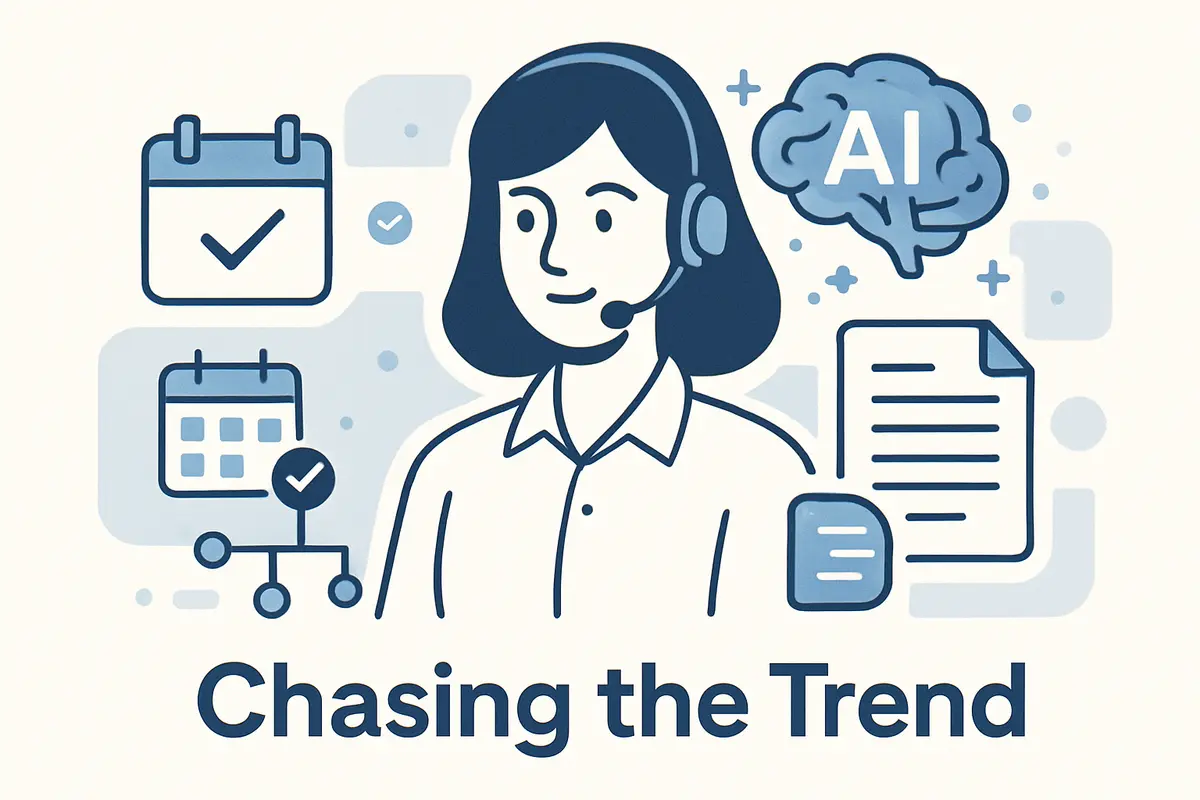
Calendly launching Callie, a meeting scheduling assistant with note-taking capabilities, is the latest entrant in a crowded market. But this move is less about innovation and more about chasing a crowded trend. Callie promises to handle scheduling and meeting summaries, a capability many startups have attempted and few have fully delivered on.
The core challenge for Calendly is not building yet another assistant but avoiding the fate of being just noise. Meeting assistants often fail due to shallow integrations, generic notes, or flawed transcription accuracy that don’t reflect how teams actually work. Offering another basic note-taker risks redundancy rather than differentiation.
Calendly’s strength was simplicity and reliability in scheduling. Expanding to note-taking demands deep AI competence and domain-specific tuning. It also puts Calendly in direct competition with solutions backed by larger ecosystems or advanced generative AI models fine-tuned for context-aware summarization. Without that, Callie risks being a subpar add-on hampering the very efficiency it promises.
This is a classic case of product extension diluting focus rather than enhancing core value. For founders and CTOs dealing with meeting overload, Callie won’t solve the fatigue or reliability problems at scale. It’s a reminder that jumping on AI features isn’t always the right answer. Sometimes the sharper move is to integrate best-in-class tools rather than build your own in a saturated niche.
Leave a Reply