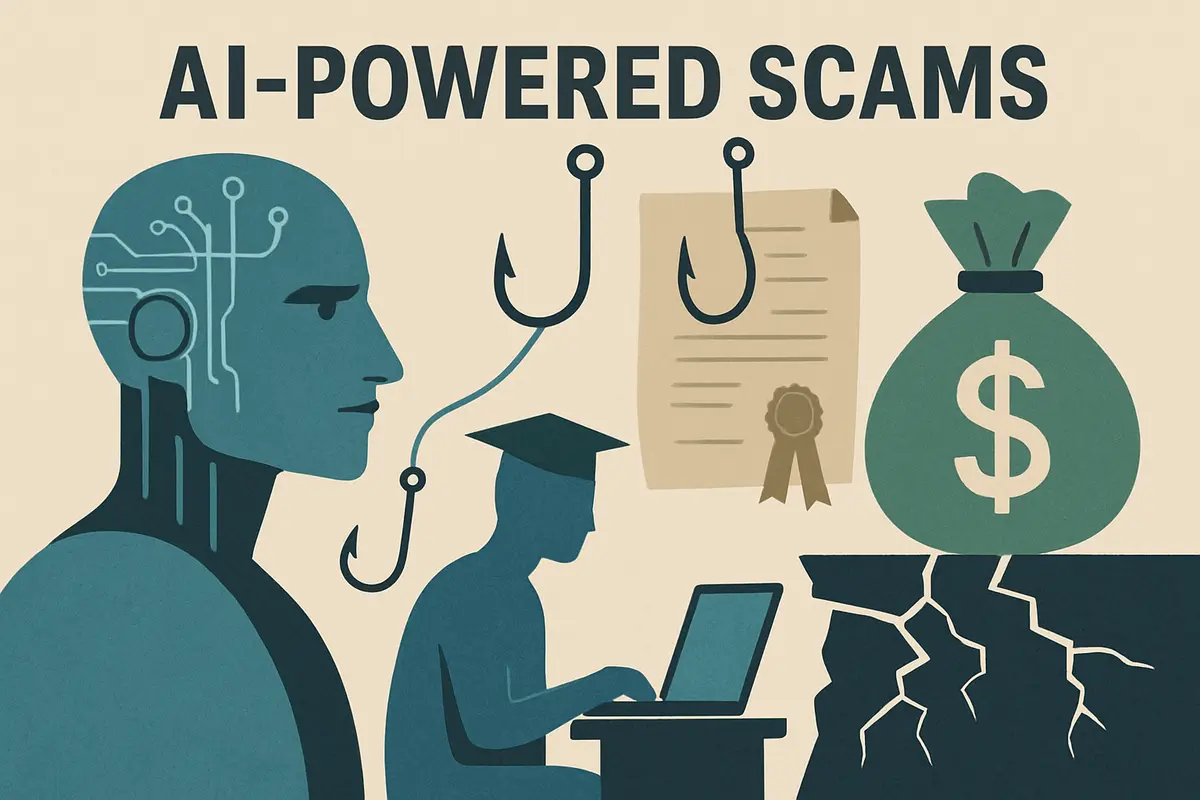
The rise of AI-powered scams in US community colleges is not just a tech problem—it’s a symptom of deeper systemic cracks. Fraudsters aren’t hacking systems directly, they’re gaming incentives designed for genuine students by enrolling fake identities and using AI to produce coursework automatically. The financial aid meant for education ends up lining pockets.
This scenario exposes a blind spot in how educational institutions verify enrollment and academic participation. It’s tempting to blame AI as the enabler of cheating, but the root cause runs far deeper: the business model itself creates incentives worth exploiting. History professor David Roach’s skeptical remark—”Was it always the case that half of our students would cheat if it were easy enough?”—hits the core question. If the system had been bulletproof, such large-scale cheating wouldn’t be profitable.
For tech builders and decision-makers in regulated sectors, this should ignite reflection. AI will be misused as long as systemic incentives remain misaligned and oversight gaps exist. Relying too much on AI to solve school administration or compliance without addressing foundational flaws will only shift where vulnerabilities show up. Look beyond surface-level AI fears: the real challenge isn’t the tool, but what we incentivize and how we validate the resulting behaviour.
This isn’t a call to reject AI—it’s an invitation to rethink the structures that AI interacts with. Otherwise, AI becomes just another lever amplifying old weaknesses.
Leave a Reply