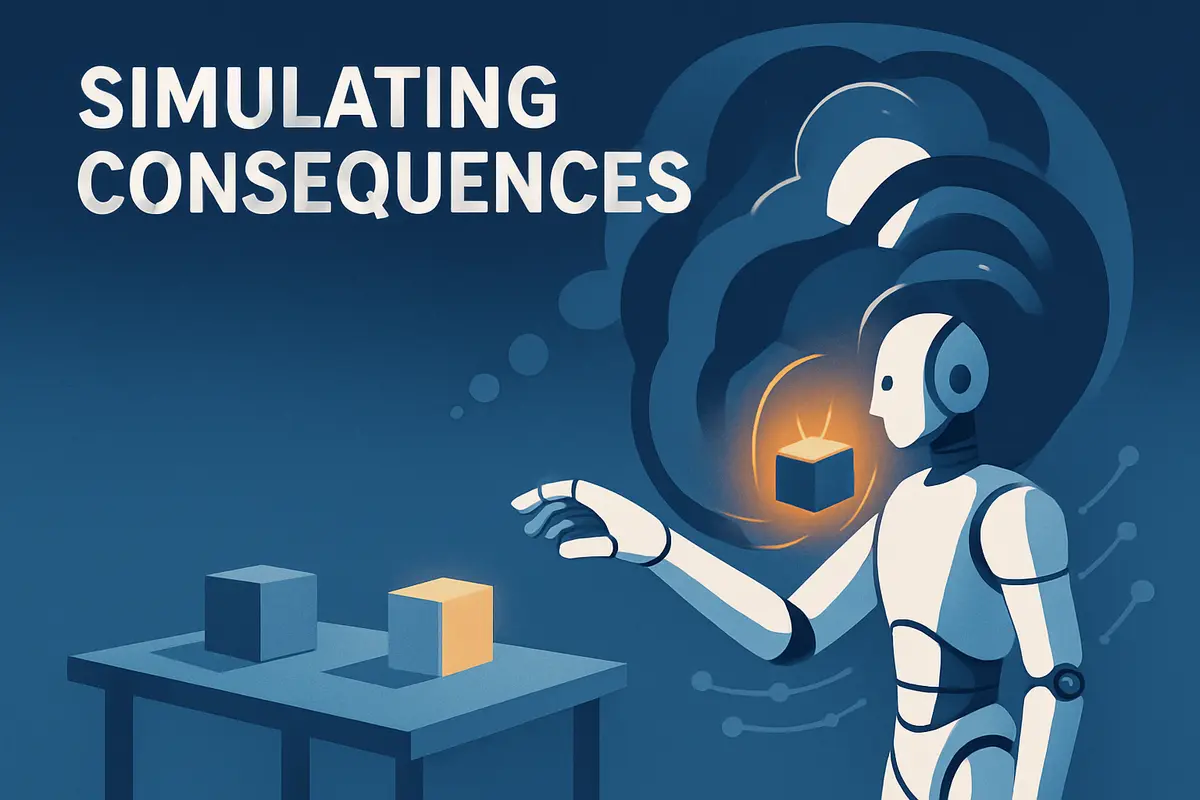
Robotics AI has hit a wall with understanding cause and effect. Current systems can match a camera image to a movement, but they don’t grasp what happens next. World Action Models change that by enabling robots to simulate the consequences of their actions before they move. This is more than an academic improvement—it affects how AI can be practical for small and medium businesses (SMEs) working on automation or robotics.
These models learn from ordinary videos with no special action labels, something traditional robotics AI couldn’t do. For SMEs, the immediate implications aren’t that you’ll be deploying a humanoid robot next quarter. Instead, this signals a shift towards smarter, more adaptable automation with less data engineering overhead. SMEs can start thinking about integrating robotics that understand their environment better, requiring fewer custom datasets and less costly manual setup.
However, the technology and its computational demands remain non-trivial. Implementing these models will involve advanced engineering and compute resource investments not yet light enough for most SMEs to jump on directly. The benefit here is indirect: as the technology matures and spreads, costs will drop and the models will be integrated into accessible robotics platforms and AI tools.
For founders and CTOs, the takeaway is to watch this space without rushing in. Focus on achievable automation today, but factor in that tomorrow’s robotics will be more context-aware and easier to train. Don’t chase every new robotics AI headline; instead, plan your AI roadmap acknowledging this paradigm shift is coming, but not here yet.
The real question for SMEs isn’t if robots will simulate consequences but when you’ll get tools that do it for you.
Leave a Reply