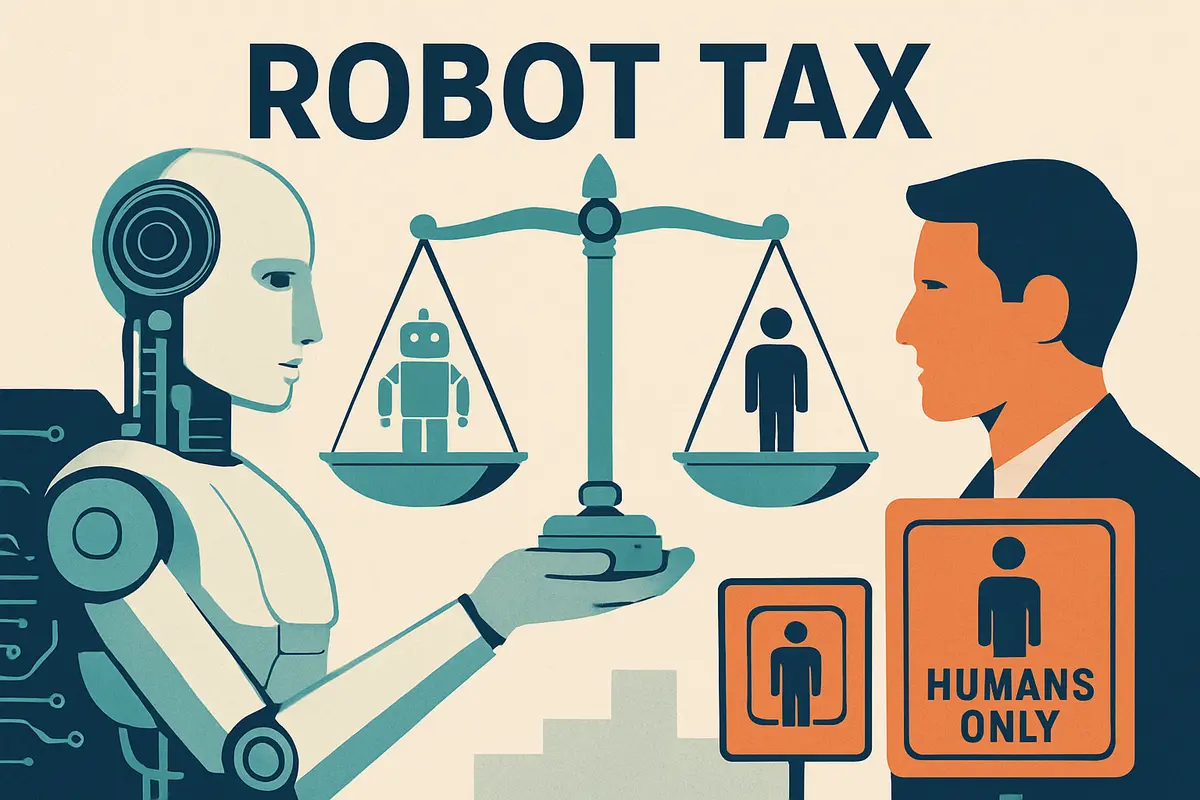
Bill Gates’ call for a robot tax alongside the notion of reserving certain jobs for humans highlights a significant misunderstanding of how AI and automation will influence the labor market and the broader economy. This proposal is based on an assumption that AI will quickly and entirely replace human workers, warranting taxation to offset economic disruption. Historically, however, automation has not only displaced workers but also created new opportunities and jobs, reflecting the evolving nature of work rather than a simple zero-sum game.
The proposed robot tax risks imposing artificial barriers to innovation and technological progress. By discouraging companies from automating processes, such taxation could hinder competitiveness and slow economic growth. Businesses, particularly smaller ones or startups with limited margins, may face disproportionate burdens, reducing their ability to invest in new technologies and evolve with market demands.
Gates’ idea of ‘human reserved’ jobs presents an overly simplistic view of labor markets. The assumption that policies can precisely dictate which jobs remain human-only ignores the complex, dynamic nature of economies and workforces. Such rigid divides often produce unintended consequences, such as market inefficiencies or reduced flexibility necessary to adapt to technological change.
Effective AI policy should extend beyond quick fixes like robot taxes. Instead, it should focus on adaptive education systems, robust social safety nets, and incentives that promote sustainable economic growth. Policymakers must ensure that businesses and workers are supported to transition and thrive alongside technology, encouraging innovation while safeguarding societal well-being.
Leave a Reply